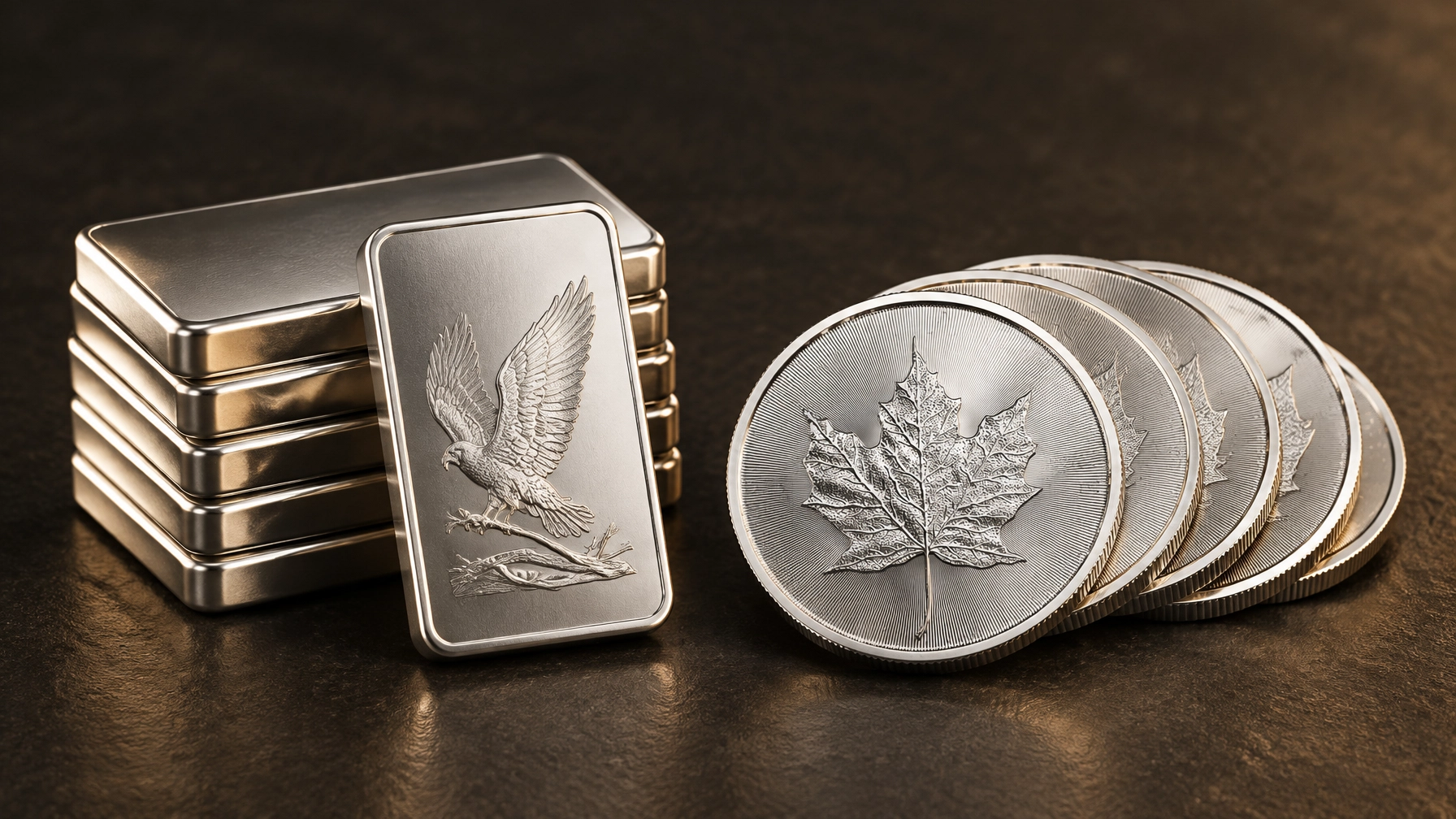
Silver has served as money, industrial material, and a store of value for thousands of years. In 2026, investors can choose from many forms of physical silver, but two remain the most practical: silver bars and silver coins.
The right choice depends on your budget, storage plans, resale needs, and whether you are building a taxable account or a silver IRA.
Bars generally offer better cost efficiency. Coins generally offer greater recognition and flexibility. Both can play a role in a disciplined physical silver investment strategy.
The Short Answer
Choose silver bars when you want the most silver for your dollar.
Bars usually carry a lower premium per ounce. They stack efficiently. They are well suited for larger purchases and long-term holdings.
Choose silver coins when you want easier small transactions and broad recognition.
Sovereign coins are familiar to dealers and private buyers. They are easier to sell in smaller quantities. That flexibility often comes with a higher premium.
Before buying, compare more than the advertised price. Review the product premium, dealer spread, buyback terms, authenticity standards, storage requirements, and IRA eligibility.
What Is the Difference Between Silver Bars and Silver Coins?
Silver bars are rectangular pieces of refined bullion. They are available in several common sizes, including:
- 1-ounce bars
- 10-ounce bars
- 1-kilogram bars
- 100-ounce bars
Silver coins are round bullion pieces minted by a government mint or private mint. Common sovereign examples include the:
- American Silver Eagle
- Canadian Silver Maple Leaf
- Austrian Silver Philharmonic
- Australian Silver Kangaroo
- British Silver Britannia
A bullion coin is different from a collectible or numismatic coin. Bullion value is primarily tied to its silver content. Collectible value may also depend on rarity, condition, age, design, and mintage.
For most investors, standard bullion is the practical starting point.
Premium Per Ounce: Bars Usually Win
The spot price is the current market price of silver before dealer premiums, shipping, and other transaction costs. The premium is the amount paid above spot.
Bars typically have a lower premium because they are simpler to manufacture and distribute. Larger bars often have the lowest premium per ounce.
Coins usually carry a higher premium because buyers are also paying for:
- Government minting
- Recognized designs
- Legal-tender status
- Security features
- Higher demand in the resale market
- Packaging and distribution
A one-ounce silver coin may cost more than a one-ounce generic bar even though both contain one troy ounce of silver. That difference is not automatically excessive. It reflects the coin’s recognition and resale advantages.
However, premiums vary by product, market conditions, quantity, and dealer. Do not assume that every bar is cheaper or every coin is expensive. Compare the complete transaction.
Buy silver based on total value, not just the spot price.
Our silver product category includes bars, coins, rounds, and other forms of bullion. We help clients compare available products based on their goals.
Divisibility and Resale Flexibility
Divisibility matters when you sell.
A 100-ounce silver bar contains significant value in one piece. That can be efficient for storage, but it is less flexible if you only want to sell part of your position. You cannot divide the bar without selling the entire piece.
Coins and smaller bars allow you to sell in smaller amounts. This can help with:
- Rebalancing a portfolio
- Meeting a specific cash need
- Making a smaller purchase or sale
- Passing individual pieces to family members
- Selling without liquidating an entire holding
One-ounce coins are especially flexible. A buyer can purchase or sell one coin at a time.
Ten-ounce bars offer a middle ground. They generally provide better cost efficiency than one-ounce pieces while remaining manageable for resale.
Practical rule
- Choose 1-ounce coins for maximum divisibility.
- Choose 1-ounce or 10-ounce bars for a balance of flexibility and cost.
- Choose 100-ounce bars or larger formats for larger, long-term holdings.
Liquidity and Buyback Demand
Liquidity means how easily an asset can be sold at a fair market price.
Recognized sovereign coins generally have strong liquidity. Dealers, investors, and private buyers often know what they are buying. The weight, purity, dimensions, and design are standardized.
Bars are also liquid, especially when produced by recognized refiners. Large bars may require more verification and are usually more practical for dealer or depository transactions than casual private sales.
A reputable refiner, clear markings, and documented chain of custody can improve buyer confidence.
The resale price is not determined only by the silver spot price. It also depends on:
- Product type
- Brand or mint
- Condition
- Current market demand
- Dealer buyback policy
- Quantity being sold
- Testing and verification requirements
This is why the dealer relationship matters. Premiums and buyback spreads vary by dealer. Working directly with a wholesaler can reduce unnecessary middlemen and improve transparency.
At Gold Your Money, our differentiators include lowest industry spreads, full wholesale buyback with no broker charge, and 3-5 day delivery. We help clients understand both the purchase side and the future resale side of the transaction.
Storage Footprint: Bars Are More Efficient
Silver is dense and heavy. Storage becomes important as your holdings grow.
Bars have a clear advantage because their rectangular shape allows them to stack tightly. A 10-ounce, 1-kilogram, or 100-ounce bar can store a substantial amount of silver in a compact space.
Coins require tubes, capsules, or boxes. These systems protect the pieces and keep them organized, but they use more space per ounce.
Bars are usually the better choice for efficient storage.
For example, Gold Your Money offers 1-kilogram silver bars for buyers seeking a larger, stackable format. We also offer 10-ounce silver bars and 100-ounce IRA-eligible silver bars, subject to current availability and account requirements.
Store physical metal securely. Consider a professional vault, an appropriate safe, insurance, and a clear inventory record.
Silver IRA Eligibility
Silver can be held in certain self-directed retirement accounts when the product and custody arrangements meet applicable IRS requirements.
The IRS explains in Publication 590-A that an IRA may hold certain bullion and specific qualifying coins. Physical metals held inside an IRA must remain with an approved trustee or custodian. You cannot simply buy qualifying silver with IRA funds and keep it at home.
In general, IRA silver products must meet purity and product standards. Many commonly used silver IRA products are at least .999 fine and come from recognized mints or refiners.
Examples can include:
- American Silver Eagles
- Canadian Silver Maple Leafs
- Other qualifying sovereign bullion coins
- Approved silver bars
- Certain recognized rounds and products
Eligibility is product-specific. Do not rely only on a product description. Confirm the item with your IRA custodian before purchasing.
Gold Your Money offers IRA-eligible silver bars and other IRA-eligible silver options. We can help coordinate purchases for retirement accounts, but your custodian determines whether a specific product can be accepted.
Counterfeiting and Authenticity
Counterfeiting is a risk with any precious metal purchase. Protect yourself by buying from a reputable dealer and choosing recognizable products.
Sovereign coins often offer stronger visual recognition. Their official designs, standard dimensions, and security features can make them easier to identify.
Bars depend more heavily on:
- Refiner reputation
- Weight and dimensions
- Purity markings
- Serial numbers on certain products
- Assay cards or certificates
- Professional testing
Use a dealer with the ability to verify inventory. For larger bars, professional testing may include electrical conductivity, ultrasound, density analysis, or X-ray fluorescence.
Do not purchase unusually discounted metal from an unknown source. A low price is not a bargain if authenticity cannot be established.
Which Is Better for a First-Time Buyer?
Coins are often the most comfortable starting point for a first-time buyer.
A new investor may value:
- Familiar designs
- Easy-to-understand one-ounce sizes
- Simple resale
- Smaller purchases
- Broad recognition
A first-time buyer might begin with a few recognized coins, such as a Canadian Silver Maple Leaf, then add bars as the position grows.
Bars can also be appropriate for beginners, especially when the buyer wants the lowest premium and plans to hold for years. A 10-ounce bar is often a practical entry point between one-ounce pieces and large institutional formats.
Which Is Better for a Large IRA Allocation?
Bars often suit a larger IRA allocation because they can provide more ounces per dollar and use storage space efficiently.
A large retirement allocation may include:
- 10-ounce bars for flexibility
- 100-ounce bars for cost efficiency
- Recognized sovereign coins for added liquidity
- A mix of formats based on the custodian’s requirements
Do not focus only on the number of ounces. Review the premium, spread, storage arrangements, custodian requirements, and buyback process.
A balanced allocation may combine bars and coins. Bars can serve as the cost-efficient core. Coins can provide greater divisibility and resale flexibility.
Silver Bars vs. Silver Coins: Final Comparison
The Bottom Line
There is no universal winner.
Buy silver bars when cost efficiency, storage, and larger allocations matter most.
Buy silver coins when recognition, divisibility, and smaller transactions matter most.
Many investors use both. Build a practical foundation with bars. Add recognized coins for flexibility. Choose products that match your objectives, not someone else’s sales pitch.
At Gold Your Money, we help you compare options, understand premiums, and select physical silver for delivery or an eligible retirement account. We offer lowest industry spreads, full wholesale buyback with no broker charge, 3-5 day delivery, and IRA-eligible silver options.
Start with facts. Ask direct questions. Protect your hard-earned wealth and your family’s future.
Protect What You’ve Built.