The dollar is useful. It pays bills, settles taxes, and supports everyday commerce.
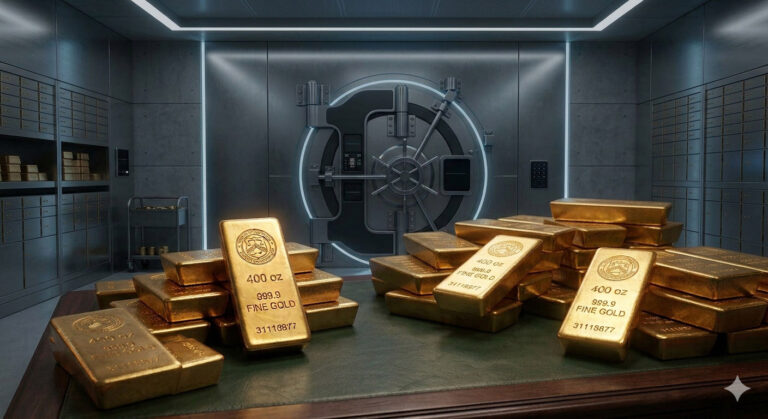
But the dollar is not scarce. Gold is.
That distinction matters when your goal is to preserve hard-earned wealth across decades. A dollar is a unit of currency issued within a financial system. Gold is a tangible asset with intrinsic value, limited supply, and no issuer promising to make it valuable.
The dollar can be created. Gold must be discovered, mined, refined, and secured.
For families protecting retirement savings and financial legacies, that difference deserves attention.
Gold Has Been Money for Thousands of Years
Gold has served as money, a store of value, and a symbol of wealth across civilizations. Ancient societies used gold for trade and reserves because it was durable, divisible, recognizable, and difficult to produce.
Gold does not rust. It does not decay. It cannot be created with a keystroke.
Governments eventually formalized gold’s monetary role through coinage and banking systems. The modern gold standard was not one continuous system, but its central principle was consistent: currency was linked to a defined quantity of gold.
That link imposed discipline.
The Gold Standard Era
Under a traditional gold standard, people or institutions could exchange currency for a stated amount of gold. The supply of money was constrained by available reserves and redemption requirements.
The United States later operated within the Bretton Woods system established after World War II. Under that system:
- The U.S. dollar was officially linked to gold at $35 per troy ounce.
- Foreign governments and central banks could exchange dollars for U.S. gold.
- Other major currencies were linked to the dollar.
- The dollar served as the primary international reserve currency.
This system placed limits on the unchecked expansion of paper claims.
Those limits ended in 1971.
1971 Changed the Dollar
On August 15, 1971, President Richard Nixon suspended the convertibility of U.S. dollars into gold for foreign governments and central banks. The decision became known as closing the “gold window.”
The Federal Reserve’s historical account explains that foreign central banks could no longer exchange their dollars for gold held by the U.S. Treasury.
The gold window never reopened.
The dollar then entered the modern fiat era. A fiat currency is not redeemable for a fixed amount of gold or another physical asset. Its value depends on legal tender laws, tax obligations, economic performance, monetary policy, and public confidence.
The dollar remains the world’s leading reserve currency. It remains widely accepted and deeply important to the global economy. But it is no longer anchored to gold.
That changed the rules.
How Currency Debasement Works
Currency debasement does not require a dramatic collapse. It can happen gradually through persistent inflation.
The basic process is straightforward:
- The money supply expands.
- Government spending exceeds revenue.
- Deficits are financed through borrowing.
- National debt grows.
- More dollars compete for goods, services, labor, and assets.
- Prices rise over time.
- Each dollar buys less.
This does not mean every new dollar immediately causes equal inflation. Economic growth, productivity, interest rates, credit conditions, and consumer demand all affect prices.
But the long-term result is clear. When the supply of currency expands faster than the supply of valuable goods and services, the purchasing power of each currency unit can decline.
A Concrete Dollar Example
According to the Bureau of Labor Statistics CPI data, $1 in 1971 had approximately the purchasing power of $8.27 in 2026.
In practical terms:
- A basket of goods costing $100 in 1971 would cost roughly $827 in 2026.
- The modern dollar buys only a fraction of what it bought in 1971.
- Holding dollars in cash for decades exposes savings to cumulative inflation.
This is not a prediction. It is a historical illustration based on consumer price data.
The dollar has not become worthless. It has become less valuable in purchasing-power terms.
That distinction matters.
Gold Versus the Dollar
Gold is priced in dollars, which can create confusion.
When the gold price rises from $35 per ounce to thousands of dollars per ounce, it may appear that gold has simply become more expensive. Part of the explanation is that the dollar has weakened relative to gold.
Think of it this way:
Gold is the measuring stick. The dollar is the price unit.
If it takes more dollars to purchase the same ounce of gold, the change may reflect a decline in the dollar’s value, increased demand for gold, changing interest rates, inflation expectations, geopolitical risk, or a combination of these factors.
The dollar price of gold has risen substantially since 1971. That reflects both gold’s enduring scarcity and the loss of the dollar’s former gold link.
Gold is not guaranteed to rise every year. Its market price can be volatile. It does not pay interest or dividends. But it has preserved purchasing power across monetary regimes, political changes, and generations.
The dollar is a claim within a financial system. Gold is an asset outside the promise of any single bank or government.
Tangible Asset Versus Paper Promise
A dollar in a bank account is an electronic balance or paper note. It represents a claim denominated in dollars.
That claim is useful. It gives you liquidity and convenience.
But it is still exposed to:
- Inflation
- Interest-rate policy
- Banking-system risk
- Currency devaluation
- Government debt levels
- Counterparty and institutional risk
Physical gold has different characteristics.
Gold is tangible. You can own a specific bar or coin.
Gold is scarce. New supply requires significant capital, energy, labor, and time.
Gold is durable. Properly stored bullion can pass from one generation to the next.
Gold has no issuer. It is not someone else’s debt or promise to pay.
This is why many investors use gold as one part of a diversified strategy. The objective is not to replace every dollar. The objective is to avoid placing every dollar of your future in the same currency system.
Ways to Own Physical Gold
You can own physical gold in two primary ways: through direct possession or within an eligible retirement account.
Home Delivery
Buying physical gold bars allows you to take direct ownership and arrange secure storage at home or through a private storage provider.
When you buy physical gold bars, review the important details:
- Weight and purity
- Recognized refiner or mint
- Product condition
- Pricing compared with the current spot market
- Shipping and insurance
- Future resale options
Gold Your Money offers direct delivery in approximately 3 to 5 days, subject to product availability and order processing.
Direct ownership gives you personal control. It also means you must take responsibility for secure storage, insurance, and estate planning.
A Gold IRA or Retirement Account
Some investors prefer to hold eligible physical precious metals inside a tax-advantaged retirement account.
A gold IRA rollover can allow eligible funds from a 401(k), TSP, 403(b), or 457(b) plan to move into a self-directed precious metals IRA. When properly structured, a rollover can generally be completed without current taxes or penalties.
The process typically involves:
- Review your existing plan and eligibility.
- Open an appropriate self-directed precious metals IRA.
- Request a direct trustee-to-trustee transfer or rollover.
- Select eligible gold products.
- Arrange approved custody and storage.
- Keep records for future distributions and tax reporting.
Rules vary by account type and individual circumstances. Speak with a qualified tax or retirement professional before moving funds. Avoid taking possession of retirement funds during a rollover unless your advisor confirms the process and timing.
A gold 401(k) strategy may be appropriate for eligible former-employer plans, while current employer plans can have different restrictions. We help clients understand the available path before they make a decision.
Why Work With Gold Your Money?
Purchasing physical precious metals should be clear, transparent, and personal.
At Gold Your Money, we focus on helping families protect hard-earned savings with tangible gold and silver.
Our core advantages include:
- Lowest industry spreads
- Full wholesale buyback with no broker charge
- 3 to 5 day delivery
- Options for direct home delivery or eligible retirement accounts
- Guidance on bars, coins, purity, liquidity, and account structure
We do not believe in fear-based selling. We believe in education, clear pricing, and helping you choose an approach that fits your goals.
The Practical Takeaway
The dollar remains essential. Gold remains independent.
Use dollars for liquidity and daily obligations. Consider physical gold as a long-term store of purchasing power and a safeguard against the gradual effects of currency debasement.
Do not wait for a crisis to learn how your savings are positioned. Review your cash reserves, retirement accounts, debt exposure, and long-term family goals now.
Then determine whether direct ownership, a precious metals IRA, or a combination of both belongs in your plan.
Gold is real money. It has endured because it is scarce, durable, tangible, and independent of any single paper promise.
Protect What You’ve Built.
This article is for educational purposes only and is not tax, legal, or investment advice. Precious metals can fluctuate in value and may not be suitable for every investor. Consult qualified professionals regarding your individual circumstances.